
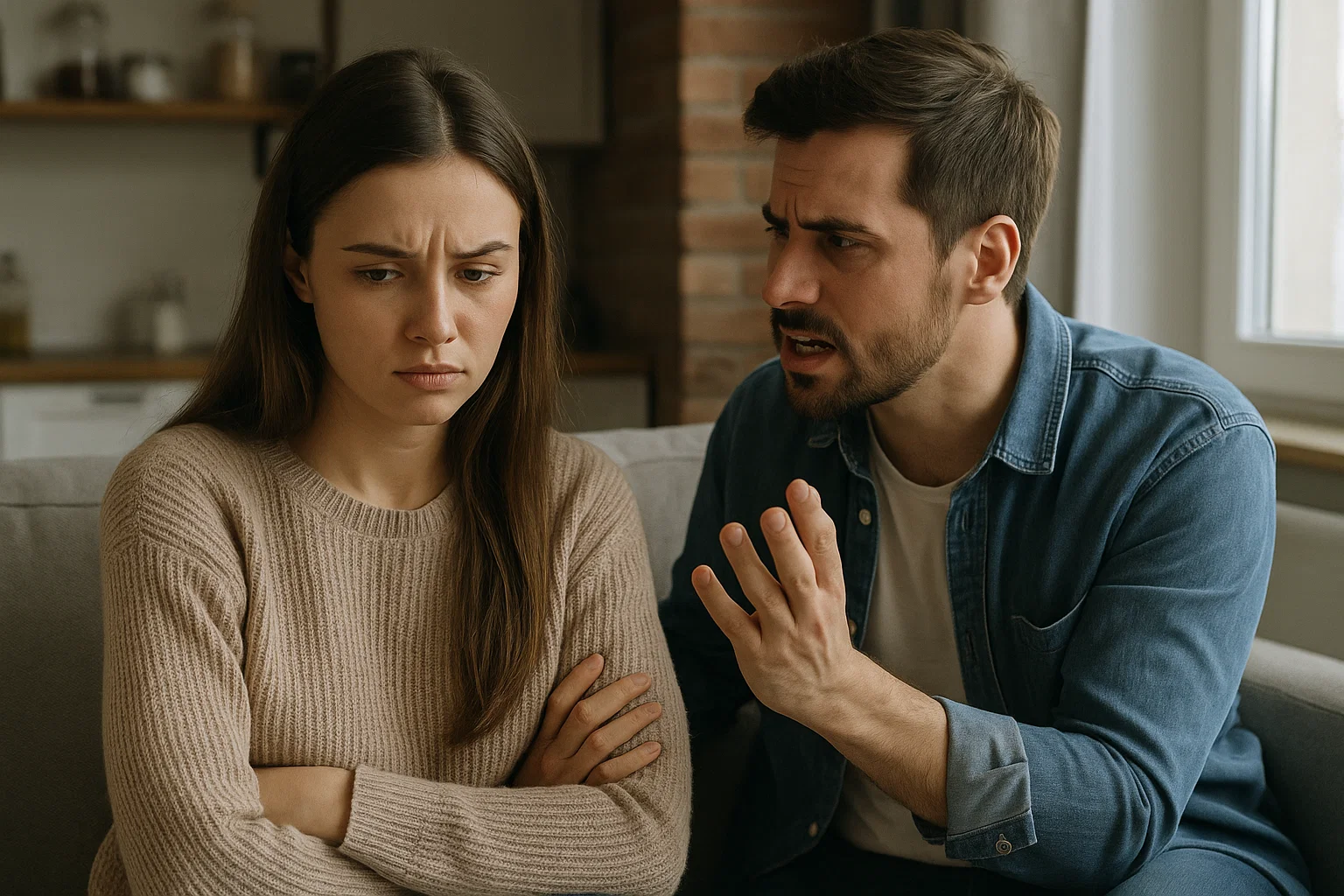
Let’s be honest. Dating is a total rollercoaster. One minute, you’re picking out honeymoon destinations, and the next, you’re genuinely wondering if it’s too late to join a convent. It’s a thrill, for sure. But it can also be completely terrifying. We’ve all been there, scrolling our phones at 2 AM, looking for answers. We type some variation of the same desperate plea into the search bar, looking for a map, a guide, anything to tell us if what we’re feeling is normal.
And that map almost always talks about “stages.”
We all know the “honeymoon stage.” But what comes after that? What happens when the butterflies pack their bags and you start noticing your partner… well, they chew really loudly. This is where the real questions pop up. You start to wonder if this is the hard part, or if it’s all downhill from here.
So, let’s get into it. What is the hardest stage of dating?
You’re not alone in asking. It’s the question that keeps us up at night, wondering if we should stick it out or just cut our losses.
More in Dating Specific Types Category
What are the red flags in the first stage of dating
What are the 5 P’s to avoid in dating
Key Takeaways
Before we dive deep, here’s the quick-and-dirty summary of what you need to know:
- It’s Not One-Size-Fits-All: The “hardest” stage is different for everyone. For some, it’s the sheer vulnerability of starting. For others, it’s the reality check of long-term commitment.
- The Main Contender: Most experts and real-life couples point to one stage as the ultimate boss level: The Power Struggle Stage. This is where the glitter wears off and the real conflicts begin.
- The Honeymoon Trap: That easy, blissful “Honeymoon Stage” is beautiful, but it’s also a blindfold. The end of this stage often feels like the hardest part because the fall is so jarring.
- Fighting Isn’t a Red Flag: Hitting a stage full of arguments doesn’t mean your relationship is doomed. In fact, getting through this conflict successfully is the very thing that builds a lasting bond.
- Stability Isn’t Boring. It’s the Goal: Don’t mistake the “Stability” or “Companionate Love” stage for a snoozefest. This is what you’ve been working for—a deep, trusting, and secure love.
So, Are These “Dating Stages” Just Something We Made Up?
Seems like a good place to start, right? Before we can crown one as the “hardest,” we should probably ask if these stages are even real.
The short answer? Yes and no.
Look, these stages aren’t some rigid, scientific checklist. You don’t get a gold star for passing “Stage 2: The Awakening.” This isn’t a video game. A real, living, breathing relationship is messy. It’s fluid. You might even bounce back and forth. A major life event (like a job loss or a move) could toss you from “Stability” right back into a “Power Struggle.”
So, why bother with them? Because they are a fantastic map. They give us a framework. They help us understand the patterns that most relationships follow. When you’re in the thick of your first massive fight, it’s a huge comfort to know that it’s not just you. It’s a known part of the journey. It helps us normalize the chaos.
Why Do We Love to Label Everything, Anyway?
We’re human. We crave order. We want to make sense of our messy feelings, and labels give us a shared language. When I can text my best friend, “I think I’m officially out of the honeymoon stage,” she knows exactly what that means. No further explanation is needed.
It’s not about cramming your unique love story into a tiny box. It’s about recognizing the part of the forest you’re in. Think of it less as a strict itinerary and more as a loose travel guide. It just points out the major landmarks: the beautiful scenic overlook (Honeymoon), the treacherous mountain pass (Power Struggle), and the peaceful, rolling hills (Stability).
Does Every Couple Go Through the Same Exact Steps?
No. Absolutely not.
Some couples breeze through one stage, while others set up camp there for years. Some might skip a “stage” entirely. This is especially true for couples who were friends first. They probably already saw each other’s flaws and navigated disagreements long before any romance was on the table.
Your journey is your own. Your timeline is your own. The “stages” are just here to make you feel a little less lost.
Isn’t the Honeymoon Stage Supposed to Be Perfect?
Ah, the beginning. This is the “can’t-eat, can’t-sleep, reach-for-the-stars, over-the-fence, World-Series-kinda-stuff.” It’s pure, uncut magic. This is the part Hollywood loves.
This stage is driven by a potent cocktail of brain chemicals. You’re flooded with dopamine (the pleasure chemical) and oxytocin (the bonding chemical). You are, quite literally, high on love. Your partner is perfect. They’re the most interesting, hilarious, and attractive person to ever walk the earth. Their little quirks? Utterly adorable.
But here’s the problem with perfection.
It’s not real.
This stage isn’t really about loving them. It’s about loving the feeling they give you. You’re not seeing the complete person. You’re seeing a beautifully edited highlight reel, and your brain is filling in the rest with pure fantasy. That can be pretty dangerous.
What’s Really Happening in Our Brains During This Time?
Think of your brain as being hijacked. The part of your brain responsible for critical thinking and judgment—your prefrontal cortex—basically punches out and goes on vacation. This is why you can’t see the flashing red flags.
It’s a biological trick. This intense attraction is nature’s way of getting two people to bond long enough to… well, you know. But it isn’t designed to last. It’s biologically and energetically expensive to keep up that level of intensity.
This stage has to end. And when it does, the landing can be rough.
Why Did My Friend Sarah Ignore Obvious Red Flags?
I have a perfect example. My friend Sarah. When she started dating this one guy, she was glowing. She wouldn’t stop talking about him. He was charming, ambitious, and so spontaneous. A few weeks in, a few of us went to dinner with them.
The waiter made a tiny mistake on their order. No big deal. But her new guy was nasty to him. I don’t just mean firm—he was condescending and cruel. I saw it. My other friends saw it.
Sarah? Completely oblivious. Later, she just brushed it off. “Oh, he’s just passionate and knows what he wants,” she said.
She was deep in the honeymoon fog. She wasn’t seeing the man who was mean to service staff. She was seeing the “strong, decisive” man her brain had invented. When they broke up six months later (because, surprise, he was just a deeply unkind person), she said, “I don’t get it. He just… changed.”
He didn’t change. The fog just lifted.
Wait, They’re Not Perfect? The ‘Ick’ Stage
This is the first jolt. It’s the moment the credits roll on the rom-com. This stage is often called the “Disillusionment” or “Awakening” stage.
It’s that Sunday morning when you wake up, look over, and think, “Huh. So that’s what they look like without the magic.”
This is when the rose-colored glasses don’t just crack; they shatter. All those “adorable” quirks? They are now deeply, profoundly irritating. The way he hums while he reads. The way she leaves her teabags in the sink. The fact that they still haven’t replaced that one burnt-out headlight.
This is when the real person starts to peek out from behind the fantasy you projected onto them.
Why Do All Their Little Quirks Suddenly Seem So Annoying?
It’s not that they became annoying. They were always annoying. You just couldn’t see it.
Your brain is coming down from that chemical high. The dopamine has packed up, and your prefrontal cortex is back at its desk. You’re no longer just a bundle of hormones; you’re a whole person again, with your own needs, boundaries, and pet peeves.
This stage feels like a betrayal. You think, “This isn’t the person I fell for.” And you’re right. You fell for a fantasy. Now, you’re being introduced to the real human being. The question is no longer “Are they perfect?”
The question is: “Are they perfect for me, flaws and all?”
Is This When Most Couples Ask, “What is the hardest stage of dating?”
For many people, yep. This is the hardest stage.
Why? It’s the biggest disappointment. The fall from the high of the honeymoon is jarring. It’s the stage where you’re slammed with the first big, terrifying question: Should I stay or should I go?
This is where you realize that love isn’t just a feeling. It’s a choice. A lot of couples don’t make it past this. They mistake the end of the honeymoon phase for the end of the relationship. They’re just thrill-seekers, chasing that initial high. The second it fades, they’re back on the apps, looking for their next dopamine hit.
If you can accept that your partner is a flawed, imperfect human (just like you) and still feel a deep well of affection and respect for them… you’re ready for the next level.
But that next level is the final boss.
Why Are We Suddenly Fighting All the Time?
Welcome to the Power Struggle.
If the Disillusionment stage was the first test, this is the final exam. This, in my opinion, and in the opinion of many relationship therapists, is the true answer to the question, “What is the hardest stage of dating?”
This is where you stop just noticing the differences and start trying to change them.
This stage is all about conflict. It’s about two individuals trying to figure out how to become a “we” without losing “me.” This is where you negotiate everything:
- How do we handle money?
- Where are we spending the holidays?
- How often do we see each other’s friends?
- Whose turn is it to take out the damn trash?
- How do we really feel about each other’s families?
These arguments are never really about the topic at hand. They are about power, control, respect, and values.
The Great Dishwasher Debate (And What It Was Really About)
I remember this so clearly with my now-husband. We had an argument about the dishwasher. A full-blown, ridiculous, knock-down-drag-out fight. I was (and am) a “rinse-it-clean-first” person. He is a “scrape-and-let-the-machine-do-its-job” person.
I would get frustrated and just re-load it after him. He would get frustrated and tell me I was wasting time and water.
One night, it just exploded. “Why can’t you just do it my way?” I yelled. “Why do you always have to control everything?” he shot back.
And there it was.
That fight wasn’t about the dishes. It was about control. I felt like my way of running a home was being dismissed. He felt like I was micromanaging him and treating him like a child. We were both trying to establish our “way” as the “right way.”
This is the power struggle. It’s ugly, it’s petty, and it’s where you find out what you’re really made of as a couple.
Is This “Power Struggle” Stage Really About Winning?
It feels like it. It feels like every argument is a battle you have to win, or else you’ll be “wrong” for the rest of your life. You’re both digging in your heels, desperate to protect your own identity.
This is the stage where all your old wounds—from your childhood, your family, your exes—come bubbling to the surface. Your “triggers” are on full display.
But here’s the secret: you don’t “win” the power struggle stage. You survive it. Together.
The only way out is through. You have to learn how to communicate. You have to learn how to fight productively. You have to learn how to see the world from your partner’s perspective, even when you think they’re being completely irrational (like about a dishwasher).
How Do We Fight… Productively?
This is the million-dollar question. This is where you learn the most valuable relationship skills. Productive fighting isn’t about winning. It’s about understanding.
It’s about learning to use “I” statements instead of “you” statements.
- Bad: “You never listen to me.”
- Good: “When that happens, I feel dismissed and unimportant.”
It’s about learning to take a time-out when things get too hot. It’s about learning to apologize. Genuinely. It’s about learning to repair the damage after a fight.
Couples who get through this stage come out the other side with a deep, profound respect for one another. They’ve seen each other at their worst and decided to stay. As renowned relationship expert Dr. John Gottman explains, the most successful couples aren’t the ones who don’t fight; they’re the ones who know how to navigate conflict and repair the connection afterward.
This stage is, without a doubt, a trial by fire. It’s exhausting. It’s painful. And it is, by far, the hardest stage of dating.
We Survived the Fights… Now What? Is This Boring?
If you make it through the fire of the power struggle, you land here. The “Stability” or “Companionate Love” stage.
And your first reaction might be… “Oh. Is this it?”
The drama is gone. The fighting has died down. The “high” of the honeymoon is a distant memory. You know all their flaws, and you’ve (mostly) accepted them. You have your routines. You know their coffee order. You can predict their reaction to a bad day at work.
It’s… comfortable.
And for people addicted to drama, “comfortable” feels a lot like “boring.” This is another major exit ramp for couples. They mistake peace for a lack of passion. They think the “spark” is gone, so the relationship must be over.
They could not be more wrong.
The “Boring” Night That Meant Everything
I’ll never forget one of the first nights my husband and I really felt this. We had just made it through a really tough few months—a classic power struggle. We were both just… tired.
It was a random Tuesday. We made cheap frozen pizza, sat on the couch in our ratty sweatpants, and watched some dumb comedy on TV. We barely even talked. At one point, I looked over at him, and he was half-asleep with his hand resting on my knee.
I was overcome with this feeling. It wasn’t butterflies. It wasn’t a fiery, passionate inferno.
It was peace.
It was the feeling of being completely, 100% myself with another human, and knowing, without a shadow of a doubt, that I was safe. I wasn’t being judged. I didn’t have to perform. I was just… home.
That “boring” night was more profound than any of our “exciting” honeymoon dates.
How is “Stable Love” Different from “Honeymoon Love”?
The honeymoon is “passionate love.” It’s an intoxicating, all-consuming (and temporary) state.
This is “companionate love.” It’s the love that lasts. It’s built on a foundation, not just a feeling. It’s made of:
- Deep Friendship: You genuinely like each other as people.
- Mutual Respect: You’ve seen each other’s ugly sides and you respect each other more for it.
- Trust: This is the big one. You’ve built a rock-solid history of being there for each other.
- Shared Goals: You’re no longer two people fighting for the wheel; you’re a team, looking in the same direction.
This isn’t the end of passion. It’s the evolution of it. Passion now comes from a place of deep intimacy and knowledge, not just mystery and novelty. It’s the spark that comes from a shared laugh, a supportive hug, and the security of knowing you have a true partner in life.
This stage isn’t boring. It’s the reward.
Is “Commitment” Just a Piece of Paper?
This is the final “stage,” if you can even call it that. It’s less a stage and more a conscious, ongoing choice.
This is where you make the decision to be a team. For real. For many, this looks like moving in together, getting engaged, or getting married. For others, it’s simply a clear, spoken promise of a shared future, whatever that may look like.
This isn’t a finish line. You don’t “arrive” at commitment and then just coast. It’s the decision to keep choosing your partner, every single day.
It’s the choice to keep working on the relationship. It’s the choice to handle the next power struggle (and there will be new ones) with the tools you’ve learned. It’s the choice to nurture your companionate love and keep the spark of friendship alive.
What Does Real, Intentional Commitment Look Like?
It’s not just about the big gestures. It’s about the small, daily acts of service and love.
It’s about being your partner’s biggest cheerleader. It’s about creating shared dreams and actively working toward them. It’s about being willing to be the “bigger person” sometimes and apologize first. It’s about realizing that a “win” for your partner is a “win” for your team.
Commitment isn’t a cage. It’s the safe harbor you build together. It’s what allows both of you to go out into the world and be your best, bravest selves, knowing you always have that safe place to return to.
So, What Is the Hardest Stage of Dating?
We’ve walked the whole path. From the dizzying high to the crushing disappointment, to the exhausting fights, and finally, to the profound peace.
So, what’s the verdict?
While the end of the honeymoon stage feels like a painful shock, the crown for the hardest stage of dating has to go to the Power Struggle.
It’s the stage that demands the most from you. It forces you to be vulnerable, to look at your own flaws, to learn to communicate under pressure, and to see your partner as a real, complex human. It’s the make-or-break trial that separates the temporary flings from the lifetime partnerships.
It is, in every sense of the word, work.
But here’s the final, most important truth: you’re not supposed to go through it alone. The whole point of the power struggle is to learn how to stop being two opponents and start being one team. The hardest stage is just a bridge. And what’s on the other side is worth every single terrifying, frustrating, and ultimately, wonderful step.
FAQ
Why is the honeymoon stage considered deceptive or not entirely real?
The honeymoon stage is driven by chemical highs like dopamine and oxytocin, making everything seem perfect. However, this feeling is temporary and based on fantasy, not a complete understanding of the partner’s true personality.
What typically triggers the disillusionment or ‘Ick’ stage?
The ‘Ick’ stage is triggered when the initial chemical high fades, revealing the real behaviors and quirks of the partner that may now seem irritating, leading to disappointment and disillusionment.
How does a relationship transition from the conflict of the power struggle to stability?
After surviving conflicts, learning productive communication, and repairing damage from disagreements, couples reach the stability stage, characterized by mutual understanding, respect, deep friendship, and trust.
Is commitment just about a piece of paper like marriage or moving in together?
No, true commitment is a conscious, ongoing choice to be a team, which involves daily acts of love, support, sharing goals, and continually choosing each other over time.